

OUR STORY

Born from the pink-
hued streets of Jaipur

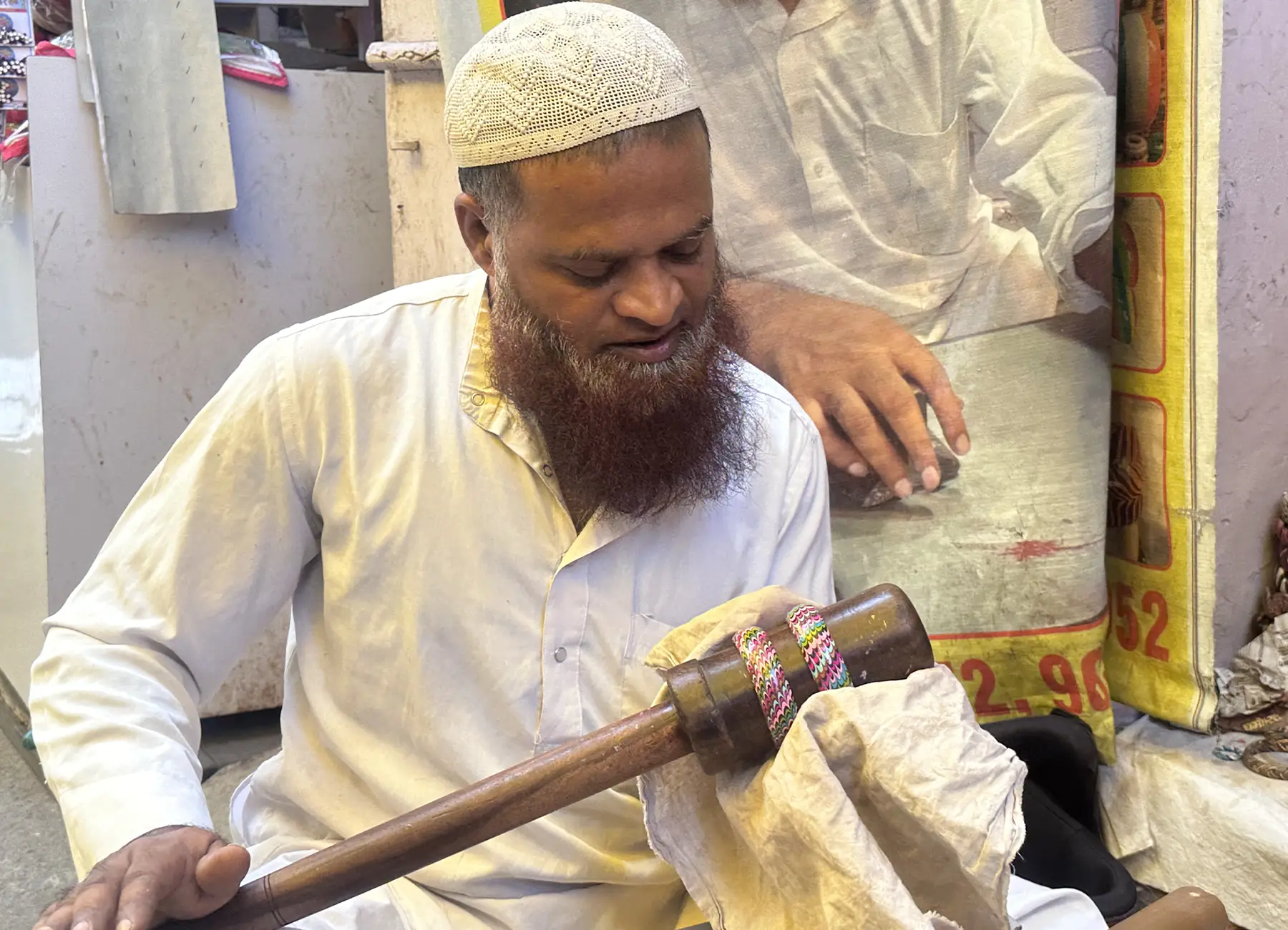
Karigar was born from the shared observations of three students raised in the pink-hued streets of Jaipur. Growing up surrounded by the city's craftsmanship, art was never separate from daily life; it existed in the streets, the homes, and the rhythm of the city itself. But over time, that rhythm began to change. The sounds of creation grew quieter, and the presence of artisans became less visible, even as their work continued to shape the city's cultural identity.

img
THE REALISATION

Not a loss of skill.
A loss of recognition.

What we began to notice was not a loss of skill, but a loss of recognition. The mastery remained, yet the systems around it no longer recognised or valued it in the same way. Karigar emerged from this realisation, an effort to ensure that the soul of Jaipur's craftsmanship does not remain hidden or fade with time, but instead continues to be recognised, valued, and relevant in the modern world.

img
THE VOICES BEHIND KARIGAR

Three perspectives.
One shared urgency.

Anika Singh

Anika Singh

Anika's motivation stemmed from an understanding of the uncertainty surrounding traditional crafts. While the work carried immense cultural and creative value, it did not always translate into sustainable livelihoods for the artisans themselves. Seeing this imbalance made it clear that appreciation alone is not enough; there must also be systems that support artisans in a meaningful and lasting way. Her perspective has shaped Karigar's commitment to creating both greater visibility and long-term continuity for Rajasthan's artisan communities.


Samarveer Singh Shekhawat

Samarveer Singh Shekhawat

Samarveer's inspiration grew from the environment in which he was raised. As the great-grandson of Padma Shri Shilp Guru Kripal Singh Shekhawat, widely recognised as the ‘Father of Blue Pottery’, he grew up surrounded by its workshops, its processes, and the legacy it carried. Over time, he began to notice a disconnect: while the finished pieces were admired, the extraordinary skill and years of mastery behind them often remained unseen. This realisation inspired his desire to create something that restores visibility to the artisan, not just the artwork.

Trishiv Ohlan

Trishiv Ohlan

Trishiv's perspective developed through observing how people engage with traditional art in everyday life. He noticed that appreciation often remained at a surface level, focused on the finished object rather than the effort, time, and precision behind it. This gap between what is seen and what goes into creating it made him question how society assigns value, and why deeply skilled work is so often overlooked. For him, Karigar is about bridging that gap.

HOW WE WORK

The Karigar ecosystem

01

The Digital Platform

The Karigar website serves as the project's central platform, bringing together information about Jaipur's artisan communities in a single, accessible space. At its heart is the Geo-Tag Map, which has documented and digitally mapped 2,826 artisans across 10 traditional crafts throughout Jaipur.

By recording artisan locations, workshops, and craft clusters, the map offers an overview of the city's living craft landscape while classifying each tradition as Stable, Vulnerable, or Endangered.

Building upon the Geo-Tag Map is the Karigar Digital Archive, a growing repository dedicated to documenting the artisans behind these craft traditions and preserving the knowledge they carry.

Through interviews, documentary videos, photographs, and written records, the archive captures the stories, techniques, and experiences of master artisans, preserving forms of knowledge that are often passed from one generation to the next through practice rather than formal documentation.

02

The Physical Exhibition

Complementing the digital platform is Karigar's public exhibition, featuring 32 interpretive artworks inspired by Jaipur's artisan communities and the craft traditions they continue to preserve.

Rather than focusing solely on the finished object, each artwork interprets the labour, knowledge, and mastery embedded within every stage of the creative process, offering visitors a deeper understanding of the people behind the craft.

Each painting is accompanied by a QR code linking visitors to the featured artisan's story, the corresponding location on the Geo-Tag Map, and the history and significance of the craft they practise, creating an immersive experience that brings together art, technology, and heritage.

As a non-profit initiative, proceeds from painting sales and voluntary donations are reinvested into supporting featured artisans, expanding documentation efforts, and strengthening initiatives that help preserve Jaipur's living artistic traditions for future generations.

THE PROBLEM WE'RE SOLVING

A structural
market failure.

"Jaipur's artisans are not disappearing due to a lack of skill, but because modern economic systems often fail to recognise the value of their expertise."

Jaipur's artisans are not disappearing due to a lack of skill, but because modern economic systems often fail to recognise the value of their expertise. Traditional crafts rely on years of specialised knowledge, precision, and experience that cannot be easily measured, standardised, or scaled. As a result, this mastery is frequently undervalued, leaving artisans excluded from fair pricing and formal market opportunities.

This creates a structural market failure. Consumers often cannot judge the true effort, skill, or rarity behind handcrafted objects, allowing intermediaries to capture much of the economic value while artisans remain price-takers. Despite widespread appreciation for these crafts, few systems convert recognition into sustainable livelihoods.

As incomes become increasingly uncertain, fewer young people choose to continue these traditions, placing irreplaceable knowledge and centuries-old craft practices at risk of disappearing.

OUR MISSION
Karigar's mission is to make artisanal mastery visible, valued, and economically sustainable by ensuring that traditional knowledge is recognised as cultural heritage, intellectual capital, and a vital contributor to contemporary society. Through recognition, collaboration, and long-term support, Karigar seeks to empower artisan communities, preserve endangered knowledge systems, and create conditions in which traditional craftsmanship can thrive across generations.
GET IN TOUCH

Have a question
or an idea?

Have a question or idea? We’d love to hear from you.

FOR PARTNERSHIP INQUIRIES
projectkarigar2025@gmail.com
@project.karigar_